
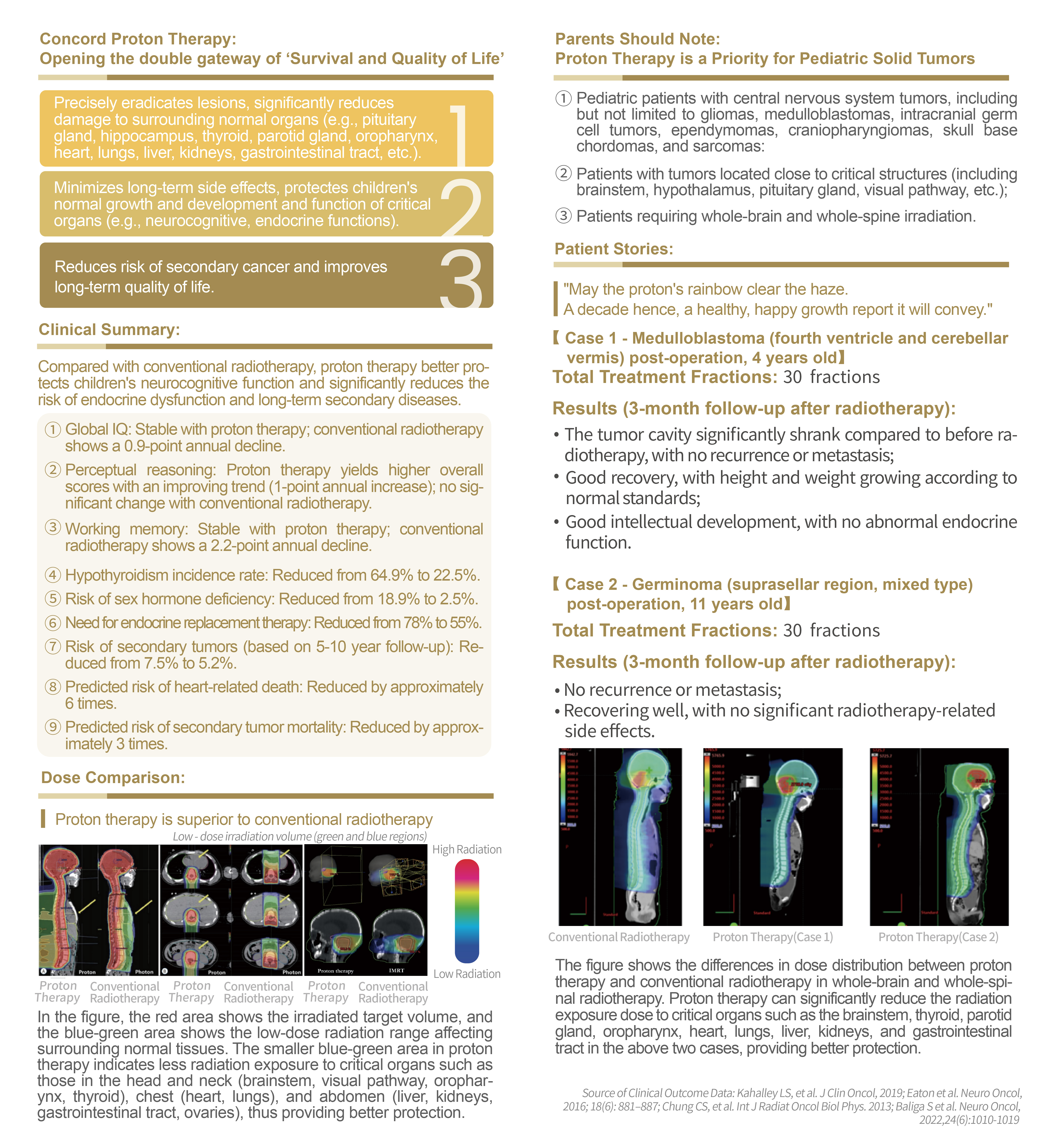
Pediatric tumors are cancers that occur in children and adolescents (ages 0–18). While childhood cancer is rare — accounting for about 1% of all cancers — it is the leading cause of disease-related death in children. Common pediatric tumors include brain tumors (medulloblastoma, glioma, ependymoma), neuroblastoma, Wilms tumor (kidney), retinoblastoma (eye), rhabdomyosarcoma, osteosarcoma, Ewing sarcoma, and leukemias/lymphomas. Treatment typically involves a combination of surgery, chemotherapy, radiation therapy, and targeted therapy. Proton therapy is particularly critical for children because their growing tissues, developing organs, and active bone growth plates are far more sensitive to radiation damage than adults'. Proton therapy can precisely target pediatric tumors while dramatically reducing radiation to healthy developing tissues — lowering the risk of growth abnormalities, cognitive impairment, secondary cancers, and long-term organ damage. Guangzhou Concord Cancer Center provides specialized pediatric cancer care with multidisciplinary expertise, proton therapy capability, and child-friendly international patient services.
Key Takeaways
- Childhood cancer is rare but curable — over 80% of pediatric cancer patients survive long-term.
- Children's growing tissues are more sensitive to radiation — precision is paramount.
- Proton therapy reduces the risk of secondary cancers and growth abnormalities in children.
- Treatment should be individualized based on tumor type, age, and developmental stage.
- International families are welcome — child-friendly care and support services available.
Pediatric Tumors Overview
Understanding childhood cancer and why precision radiation matters
Childhood cancer, while rare — affecting approximately 1 in 285 children before age 20 — is the leading cause of disease-related death in children. Unlike adult cancers, which are often linked to lifestyle factors, pediatric cancers typically result from genetic mutations occurring early in development. The most common types include leukemias (30%), brain and central nervous system tumors (26%), neuroblastoma (6%), Wilms tumor (5%), and bone/soft tissue sarcomas (including osteosarcoma, Ewing sarcoma, rhabdomyosarcoma).
Why Precision Radiation Matters for Children
Children are not small adults when it comes to radiation therapy. Their bodies are actively growing and developing — bones are elongating at growth plates, brains are forming new neural connections, and organs are still maturing. Conventional radiation therapy, while effective at killing cancer cells, can cause devastating long-term effects in children including growth plate damage leading to limb-length discrepancies, cognitive impairment from brain radiation, radiation-induced secondary cancers, cardiac and pulmonary damage, and reproductive organ dysfunction. Because children have decades of life ahead, these late effects can profoundly impact their quality of life.
Proton therapy addresses this challenge through the Bragg Peak effect — protons deposit their maximum energy precisely at the tumor site and stop, with virtually no radiation continuing beyond the target. For children, this means growing bones, developing brains, and maturing organs can be substantially spared — potentially life-changing for pediatric cancer survivors.
Common Symptoms of Pediatric Tumors
Early detection saves lives — know the warning signs in children
Pediatric cancer symptoms can be subtle and may mimic common childhood illnesses. Parents should be alert to persistent or unusual symptoms. Early diagnosis significantly improves outcomes. The following warning signs should prompt medical evaluation:
When to see a doctor: If your child experiences any persistent, unexplained, or unusual symptoms — especially headaches with morning vomiting, unexplained lumps, white pupil reflex, or persistent bone pain — consult a pediatrician immediately. Childhood cancer is rare, but early detection dramatically improves outcomes. Trust your instincts as a parent — if something seems wrong, persist in seeking evaluation.
How Pediatric Tumors Are Diagnosed
From initial evaluation to staging — the diagnostic journey
Accurate diagnosis is the foundation of effective pediatric cancer treatment. Because childhood cancers are rare and diverse, diagnosis should ideally be performed at a specialized pediatric cancer center. The diagnostic process typically follows these steps:
Physical Exam & Imaging Studies
A thorough physical examination is performed, followed by ultrasound, X-ray, CT, and/or MRI depending on the suspected tumor type. MRI is preferred for brain and soft tissue tumors due to its superior detail without radiation exposure. PET-CT may be used for staging.
Biopsy & Pathological Analysis
A tissue biopsy is performed to obtain samples for pathological examination. The specific method depends on tumor location — needle biopsy, surgical biopsy, or bone marrow aspiration. Pathological analysis determines the exact tumor type, grade, and subtype, which are critical for treatment planning.
Molecular & Genetic Testing
Advanced molecular and genetic testing identifies specific gene mutations, chromosomal abnormalities, and fusion genes — such as MYCN amplification in neuroblastoma or EWSR1-FLI1 in Ewing sarcoma. These results are essential for risk stratification and may guide targeted therapy decisions.
Staging & Multidisciplinary Treatment Planning
Combined results determine the stage and risk group, which guides treatment. A multidisciplinary team — including pediatric oncologists, pediatric surgeons, radiation oncologists, and pathologists — develops a personalized treatment plan. For children requiring radiation, proton therapy is strongly considered to minimize long-term effects.
Pediatric Tumor Treatment Options
Comprehensive, personalized treatment pathways for children
Pediatric cancer treatment is highly individualized and almost always involves a multidisciplinary approach. The optimal strategy depends on tumor type, location, stage, child's age, and the critical need to minimize long-term side effects. For many pediatric tumors, a combination of surgery, chemotherapy, and radiation therapy achieves the best outcomes.
Why Proton Therapy for Pediatric Tumors
Precision that protects growing bodies and developing minds
Proton therapy is the preferred radiation modality for children whenever radiation is needed. The reason is simple: children's growing tissues are far more sensitive to radiation damage than adults', and children have decades of life ahead during which late radiation effects can manifest. The Bragg Peak effect allows protons to stop precisely at the tumor, eliminating the exit dose that conventional radiation delivers to healthy developing tissue. For pediatric patients, this precision is not just beneficial — it is transformative.
Why Choose Concord
Pediatric cancer care designed around children and families
Meet Our Specialists
A multidisciplinary team dedicated to pediatric cancer care
Patient Story: A Journey of Hope
Real outcomes from real patients
Emma, 7 — Medulloblastoma (Brain Tumor)
Diagnosed with medulloblastoma at age 7 after weeks of morning headaches and vomiting, Emma underwent surgery to remove the brain tumor, followed by the need for craniospinal radiation (radiation to the entire brain and spinal cord). Conventional radiation would have risked significant cognitive decline, growth hormone deficiency, and secondary cancers over her lifetime. Proton therapy at GCCC allowed precise tumor targeting while dramatically reducing radiation to her healthy brain tissue, heart, lungs, and growing spine — critical for preserving her cognitive development and future quality of life.
Frequently Asked Questions About Proton Therapy for Pediatric Tumors
Answers to common questions about proton therapy treatment for children with cancer at Guangzhou Concord Cancer Center
Proton therapy is often recommended because it can precisely target tumors while significantly reducing radiation exposure to healthy, developing tissues in children. Children's growing bodies are especially sensitive to radiation, and proton therapy's ability to stop precisely at the tumor site helps protect their organs, bones, and cognitive development.
Yes. It is considered safer in many cases because it helps reduce long-term side effects, especially those affecting growth, hormones, and brain development. Studies have shown that proton therapy significantly lowers the risk of secondary cancers and developmental delays compared to conventional radiation therapy in pediatric patients.
Proton therapy is designed to minimize radiation to healthy tissues, which may help reduce the risk of growth and developmental complications. By sparing surrounding organs and growth plates, proton therapy helps protect your child's long-term development and quality of life.
No. The treatment is completely painless and non-invasive. Children do not feel radiation during the procedure. The child simply lies still on a treatment table for approximately 15–30 minutes while the proton beam is precisely delivered to the tumor.
Treatment duration varies depending on the tumor type, but it typically lasts 2 to 6 weeks with daily sessions (Monday–Friday). The exact schedule is determined by our pediatric radiation oncology team based on the individual treatment plan.
Younger children who cannot stay still may require mild sedation or anesthesia to ensure precise treatment delivery. This is safely administered by our pediatric anesthesia team. Older children and teenagers can usually remain still without sedation, using entertainment and gentle coaching from our child life specialists.
It may be used for brain tumors, spinal tumors, sarcomas, and other solid tumors depending on individual evaluation. Our multidisciplinary pediatric oncology team will assess each case to determine the most appropriate treatment approach for your child.
Yes. International patient support services are available, including medical coordination, travel assistance, and treatment planning. Our dedicated international patient services team offers multilingual support to help families navigate every step of the treatment journey, from initial consultation to post-treatment follow-up.
Have more questions about proton therapy for pediatric tumors?
Our expert team is ready to provide personalized consultation for your child.
Research & Clinical Guidelines
Evidence-based foundation for proton therapy in pediatric tumors
COG & SIOP Guidelines — Pediatric Cancer (2026)
International pediatric oncology groups (Children's Oncology Group, SIOP) recognize proton therapy as the preferred radiation modality for children whenever radiation is indicated, due to reduced long-term toxicity.
Cognitive Preservation in Pediatric Brain Tumors
Clinical studies demonstrate that proton therapy reduces radiation to healthy brain tissue by up to 80% compared to conventional radiation, preserving IQ and cognitive function in children with brain tumors.
Secondary Cancer Risk Reduction
Research shows proton therapy reduces the risk of radiation-induced secondary cancers by up to 10-fold in children — one of the most critical long-term benefits for pediatric cancer survivors with decades of life ahead.
Growth Plate Sparing in Pediatric Sarcoma
Proton therapy reduces dose to growth plates by up to 70%, preventing limb-length discrepancies and growth abnormalities in children with bone and soft tissue sarcomas.
International Consensus on Proton Therapy for Children
Leading pediatric cancer centers worldwide incorporate proton therapy as the standard of care for children requiring radiation, reflecting the critical importance of minimizing long-term effects in growing patients.
Ready to Learn if Proton Therapy Is Right for Your Child?
Our international patient services team is ready to provide a personalized consultation.
Get expert medical evaluation, treatment planning, and comprehensive support — all in one place.