
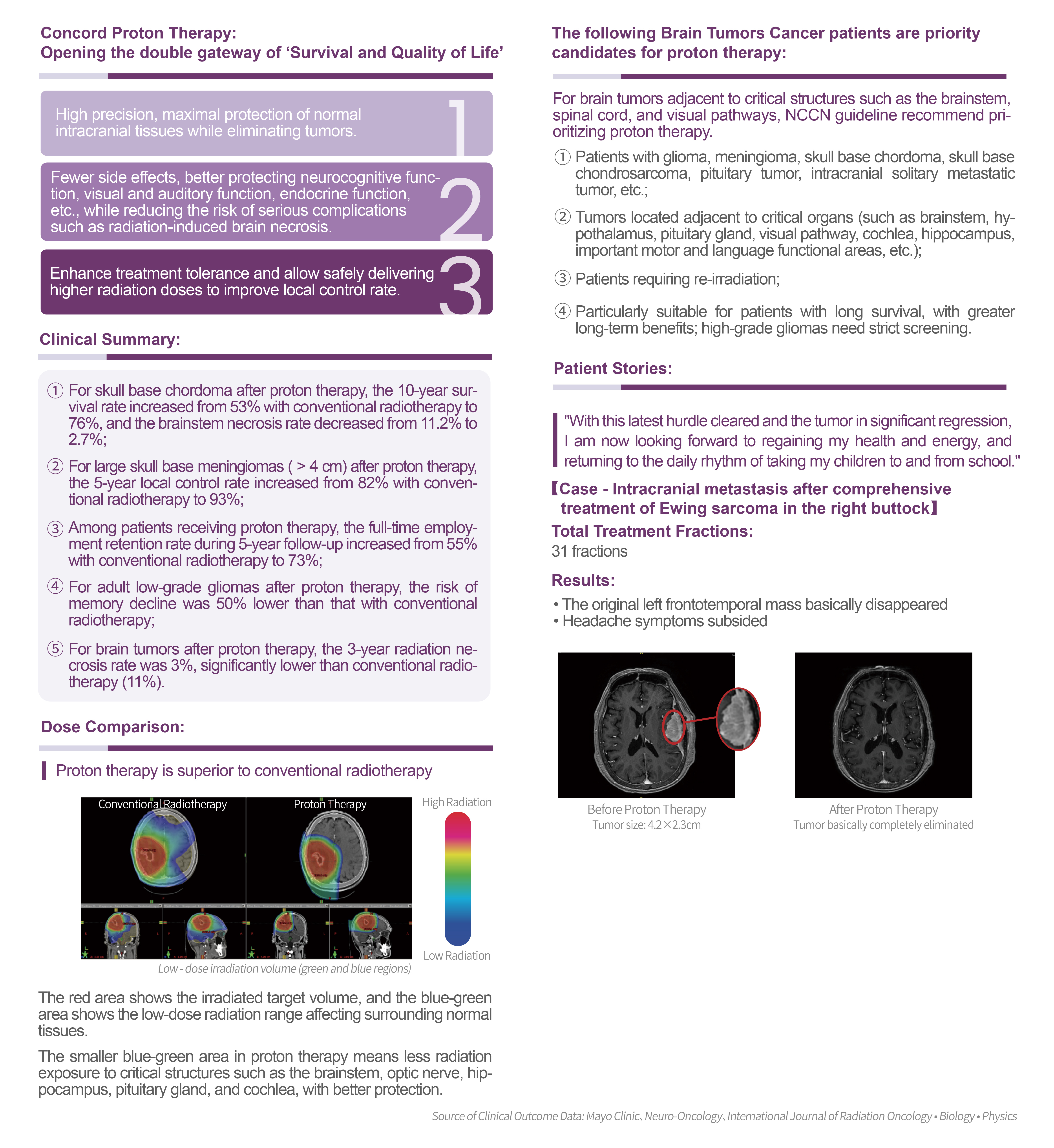
Brain tumors are abnormal growths of cells within the brain or central nervous system. They can be benign (non-cancerous) or malignant (cancerous), and may be primary (originating in the brain) or metastatic (spreading from elsewhere). Common types include gliomas (astrocytoma, glioblastoma, oligodendroglioma), meningioma, medulloblastoma, pituitary adenoma, acoustic neuroma, and ependymoma. Treatment options depend on tumor type, location, size, and patient health, and may include surgery, radiation therapy, chemotherapy, targeted therapy, and immunotherapy. Proton therapy is an advanced form of radiation that can precisely target brain tumors while dramatically reducing radiation exposure to healthy brain tissue, brainstem, optic nerves, and other critical neurological structures. This precision is especially valuable for tumors near critical brain regions, pediatric brain tumors, skull base tumors, and reirradiation cases — where preserving cognitive function and neurological integrity is paramount. Guangzhou Concord Cancer Center provides comprehensive brain tumor care with multidisciplinary expertise, proton therapy capability, and dedicated international patient services.
Key Takeaways
- Brain tumor symptoms vary by location — persistent headaches and seizures warrant evaluation.
- Molecular testing (IDH, MGMT, 1p/19q) guides personalized treatment for gliomas.
- Proton therapy can protect healthy brain tissue and preserve cognitive function.
- Treatment should be individualized based on tumor type, grade, location, and patient factors.
- International patients are welcome — online consultation and coordinated care are available.
Brain Tumors Overview
Understanding brain tumors and why precision radiation matters
Brain tumors are abnormal growths of cells within the brain or central nervous system. They can be benign (non-cancerous) or malignant (cancerous), and are classified as either primary (originating in the brain) or metastatic (spreading from cancer elsewhere in the body). The most common primary brain tumors include gliomas (astrocytoma, glioblastoma multiforme/GBM, oligodendroglioma, ependymoma), meningiomas (tumors of the brain lining), medulloblastomas (pediatric brain tumors), pituitary adenomas, and acoustic neuromas (vestibular schwannomas).
Why Precision Radiation Matters for Brain Tumors
The brain is the most complex and functionally critical organ in the human body. Every region controls specific functions — movement, speech, memory, vision, hearing, personality, and vital life functions. Conventional radiation therapy, while effective at killing tumor cells, can inadvertently damage healthy brain tissue, leading to cognitive decline, memory impairment, personality changes, hormonal dysfunction, and neurological deficits. The brainstem, optic nerves, hypothalamus, and pituitary gland are especially vulnerable structures that must be protected during radiation.
Proton therapy addresses this challenge through the Bragg Peak effect — protons deposit their maximum energy precisely at the tumor site and stop, with virtually no radiation continuing beyond the target. For brain tumors, this means healthy brain tissue, the brainstem, optic nerves, and other critical neurological structures can be substantially spared — preserving cognitive function and quality of life.
Common Symptoms of Brain Tumors
Early detection saves lives — know the warning signs
Brain tumor symptoms vary depending on the tumor's location, size, and growth rate. Some tumors cause symptoms by pressing on brain tissue, while others affect brain function by disrupting normal neurological pathways. The following symptoms should prompt medical evaluation:
When to see a doctor: If you experience persistent or worsening headaches (especially morning headaches with vomiting), new-onset seizures, unexplained vision changes, personality changes, or neurological symptoms like weakness or speech difficulty, consult a healthcare professional immediately. Early diagnosis and treatment of brain tumors significantly improve outcomes. An MRI with contrast is the gold standard for brain tumor detection.
How Brain Tumors Are Diagnosed
From imaging to molecular profiling — the diagnostic journey
Accurate diagnosis is the foundation of effective brain tumor treatment. The diagnostic process combines advanced imaging, tissue analysis, and molecular profiling to determine the tumor type, grade, and optimal treatment strategy.
Neurological Exam & MRI
A thorough neurological examination assesses vision, hearing, balance, coordination, reflexes, and cognitive function. MRI with contrast (gadolinium) is the gold standard for brain tumor imaging — providing detailed information about tumor size, location, and relationship to critical brain structures. Functional MRI (fMRI) may map critical brain areas before surgery.
Biopsy or Surgical Resection
A stereotactic biopsy or surgical resection obtains tissue for pathological examination. For accessible tumors, surgical removal serves dual purposes — diagnostic and therapeutic. Awake craniotomy with brain mapping may be used for tumors near critical speech or motor areas.
Pathology & Molecular Testing
Tissue samples undergo pathological analysis to determine tumor type and grade (WHO Grade I–IV). Molecular testing for IDH1/2 mutations, MGMT promoter methylation, 1p/19q codeletion, and TERT mutations is now standard for gliomas — these markers provide critical prognostic and treatment guidance information.
Tumor Board & Treatment Planning
A multidisciplinary neuro-oncology tumor board — including neurosurgeons, radiation oncologists, medical neuro-oncologists, and neuroradiologists — reviews each case. The combined results determine the optimal treatment strategy, which may involve surgery, radiation (including proton therapy), chemotherapy (temozolomide), and/or targeted therapy.
Brain Tumor Treatment Options
Comprehensive, personalized treatment pathways
Brain tumor treatment is highly individualized and depends on tumor type, grade, location, size, molecular profile, and patient health. The optimal approach often involves a combination of therapies delivered by a multidisciplinary neuro-oncology team.
Why Proton Therapy for Brain Tumors
Precision that protects the brain's most critical functions
The brain is the most functionally critical and radiosensitive organ in the body. Every cubic millimeter controls specific functions, and radiation damage to healthy brain tissue can cause irreversible neurological and cognitive deficits. Proton therapy's Bragg Peak effect allows protons to stop precisely at the tumor, eliminating the exit dose that conventional radiation delivers to healthy brain tissue beyond the target. For brain tumors located near the brainstem, optic nerves, hypothalamus, or critical cognitive areas, this precision is transformative.
Why Choose Concord
Brain tumor care designed around precision and neurological preservation
Meet Our Specialists
A multidisciplinary neuro-oncology team for brain tumor care
Patient Story: A Journey of Hope
Real outcomes from real patients
Ms. Y., 42 — Low-Grade Glioma, Left Temporal Lobe
Diagnosed with a low-grade glioma (IDH-mutant, Grade II) in the left temporal lobe after experiencing occasional word-finding difficulties, Ms. Y underwent awake craniotomy with brain mapping to maximize safe tumor removal while preserving her language function. Following surgery, proton therapy was recommended as adjuvant treatment to reduce recurrence risk. Because the tumor was located near critical language and memory areas, conventional radiation would have risked significant cognitive decline. Proton therapy at GCCC allowed precise targeting of the tumor bed while dramatically reducing radiation to surrounding healthy brain tissue.
Frequently Asked Questions About Proton Therapy for Brain Tumors
Answers to common questions about proton therapy treatment for brain tumors at Guangzhou Concord Cancer Center
Because it can precisely target tumors while minimizing radiation exposure to critical brain structures. The Bragg Peak effect allows proton beams to stop precisely at the tumor site, sparing surrounding healthy brain tissue, nerves, and vital organs that are especially sensitive to radiation damage.
Yes. It is often preferred in pediatric cases to protect brain development. Children's developing brains are particularly vulnerable to radiation damage, and proton therapy's ability to spare healthy tissue makes it an ideal treatment option for young patients with brain tumors.
Proton therapy reduces unnecessary radiation exposure, which may help preserve cognitive function. Studies have shown that compared to conventional radiation, proton therapy significantly lowers the risk of cognitive decline, particularly in memory, attention, and executive function.
Yes, it is commonly used as adjuvant therapy after tumor removal. Proton therapy helps eliminate any remaining cancer cells following surgery, reducing the risk of recurrence while minimizing damage to healthy brain tissue that was already affected by the surgical procedure.
Typically 25–35 sessions are required, delivered over 5–7 weeks. The exact number depends on the tumor type, size, location, and individual treatment plan designed by our radiation oncology team.
Side effects are usually milder than conventional radiation. Most patients experience minimal side effects, which may include mild fatigue, temporary hair loss at the treatment site, or mild scalp irritation. Because proton therapy spares more healthy tissue, the risk of long-term complications is significantly reduced.
Yes. We provide full support for international patients including consultation, visa assistance, and treatment coordination. Our dedicated international patient services team offers multilingual support, medical record pre-evaluation, and end-to-end care throughout the treatment journey.
Have more questions about proton therapy for brain tumors?
Our expert team is ready to provide personalized consultation.
Research & Clinical Guidelines
Evidence-based foundation for proton therapy in brain tumors
NCCN Guidelines — Central Nervous System Cancers (2026)
The National Comprehensive Cancer Network recognizes proton therapy as an appropriate radiation modality for brain tumors, particularly when cognitive function and critical structure sparing are priorities.
Cognitive Preservation with Proton Therapy
Clinical studies demonstrate that proton therapy reduces radiation to healthy brain tissue by up to 80% compared to IMRT, significantly lowering the risk of long-term cognitive decline in brain tumor patients.
Proton Therapy vs. IMRT — Neurocognitive Outcomes
Published research shows comparable tumor control rates between proton therapy and conventional radiation for brain tumors, with significantly lower rates of cognitive decline and neurological complications.
Skull Base & Pituitary Tumor Treatment
Proton therapy enables safe treatment of skull base and pituitary tumors — located near the brainstem, optic nerves, and hypothalamus — with reduced risk of neurological and endocrine complications.
International Consensus on Proton Therapy for Brain Tumors
Leading cancer centers worldwide, including Mayo Clinic and MD Anderson, incorporate proton therapy in their brain tumor treatment protocols for selected patients requiring maximal neurological protection.
Ready to Learn if Proton Therapy Is Right for You?
Our international patient services team is ready to provide a personalized consultation.
Get expert medical evaluation, treatment planning, and comprehensive support — all in one place.