
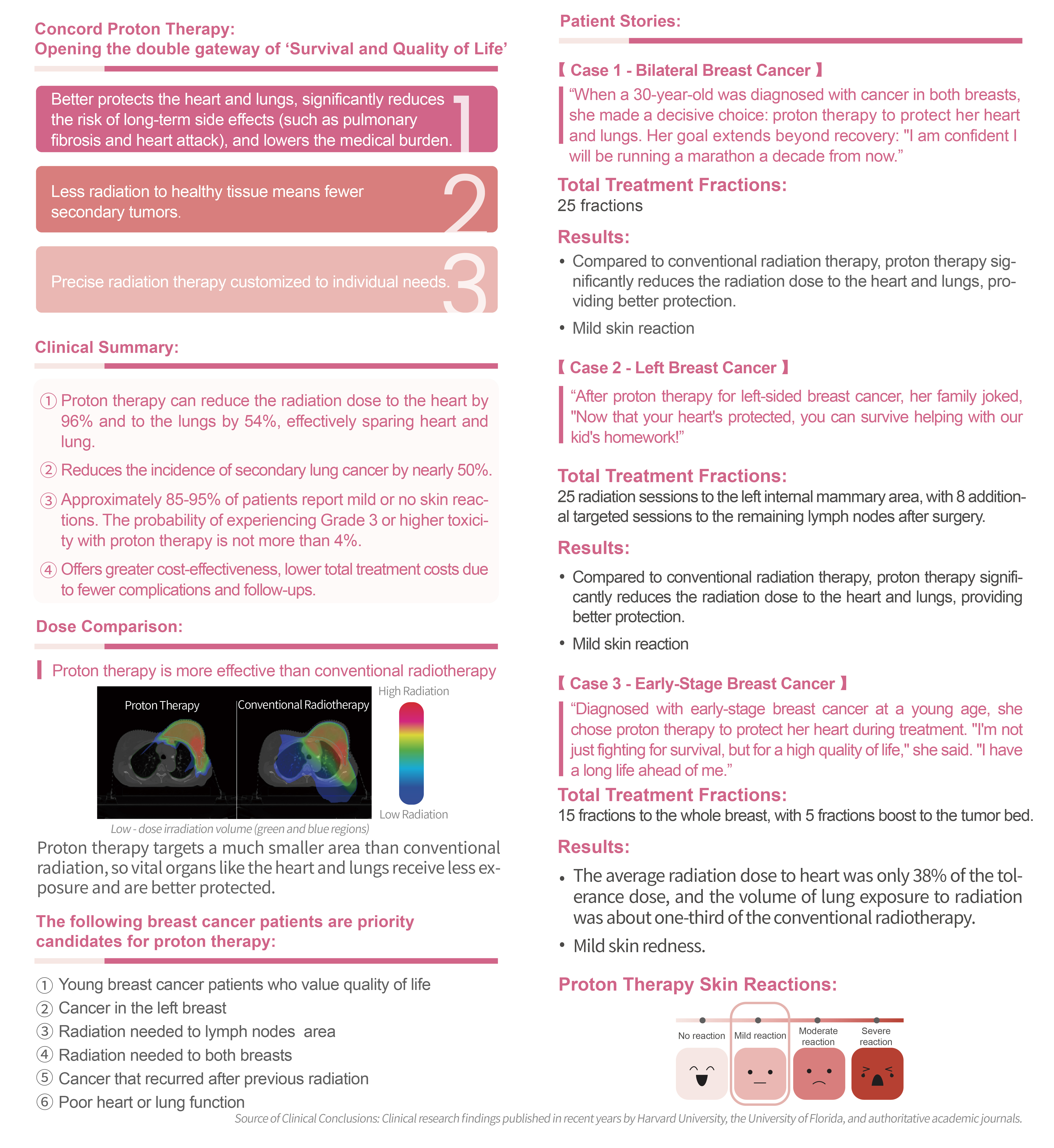
Breast cancer is the most commonly diagnosed cancer among women worldwide. Treatment options vary according to tumor type, molecular subtype and stage, and may include surgery, chemotherapy, hormone therapy, targeted therapy, immunotherapy, radiation therapy and proton therapy. Proton therapy is an advanced form of radiation therapy that can reduce radiation exposure to the heart, lungs and surrounding healthy tissues, making it particularly suitable for selected breast cancer patients, such as patients with left-sided breast cancer or those requiring regional lymph node irradiation. Guangzhou Concord Cancer Center provides multidisciplinary breast cancer care and proton therapy services for both domestic and international patients. Patients can upload medical reports for an initial review, receive treatment planning support, and consult with a care team that considers diagnosis, prior treatment, personal goals and travel needs.
Key Takeaways
- Early diagnosis improves outcomes.
- Treatment should be individualized.
- Proton therapy can better protect healthy organs in selected patients.
- International patients are welcome.
- Online consultation is available.
Breast Cancer Overview
Understanding breast cancer and why precision radiation matters
Breast cancer is the most commonly diagnosed cancer worldwide, affecting millions of women each year. It develops in the cells of the breast tissue, most commonly in the ducts (ductal carcinoma) or lobules (lobular carcinoma). While breast cancer primarily affects women, men can also develop the disease.
Why Precision Radiation Matters for Breast Cancer
The chest area contains critical organs — including the heart, lungs, ribs, and skin — that are situated very close to the breast tissue. Conventional radiation therapy, while effective at killing cancer cells, can inadvertently deliver significant radiation doses to these nearby organs. This is particularly concerning for left-sided breast cancer, where the heart lies directly behind the left breast.
Proton therapy solves this challenge by using the Bragg Peak effect — protons deposit their maximum energy precisely at the tumor site and stop, with virtually no radiation continuing beyond the target. This means the heart, lungs, and surrounding healthy tissue receive minimal to no radiation exposure.
Common Symptoms of Breast Cancer
Early detection saves lives — know the warning signs
Breast cancer may not always cause noticeable symptoms in its early stages. Regular screening is essential for early detection. However, the following symptoms should prompt immediate medical evaluation:
When to see a doctor: If you notice any unusual breast changes, especially if they persist or worsen, consult a healthcare professional for evaluation. Early-stage breast cancer often has excellent treatment outcomes, and many patients have a 5-year survival rate exceeding 90% with timely diagnosis and appropriate treatment.
How Breast Cancer Is Diagnosed
From screening to staging — the diagnostic journey
Accurate diagnosis is the foundation of effective treatment. The breast cancer diagnostic process typically follows these steps:
Imaging Studies
Mammography is the primary screening tool. If abnormalities are detected, breast ultrasound and breast MRI may be performed for further evaluation. These imaging studies help determine the size, location, and characteristics of the tumor.
Biopsy
A core needle biopsy or surgical biopsy is performed to extract tissue samples for pathological examination. This is the definitive method to confirm whether a breast abnormality is cancerous.
Pathology & Molecular Testing
Tissue samples are analyzed to determine cancer type (ductal, lobular, etc.), hormone receptor status (ER/PR), HER2 expression, and Ki-67 proliferation index. These results guide treatment planning.
Staging & Treatment Planning
Additional imaging (CT, PET-CT, bone scan) determines if cancer has spread to lymph nodes or distant organs. The combined results determine the TNM stage (Stage 0–IV), which guides the optimal treatment strategy.
Breast Cancer Treatment Options
Comprehensive, personalized treatment pathways
Breast cancer treatment is highly individualized and often involves a combination of therapies. The optimal approach depends on cancer stage, molecular subtype, patient health, and personal preferences.
Why Proton Therapy for Breast Cancer
Precision that protects what matters most
Proton therapy offers unique advantages for breast cancer treatment that conventional radiation cannot match. The key benefit lies in the Bragg Peak effect — protons deposit their radiation dose precisely at the tumor and stop, eliminating the "exit dose" that conventional radiation delivers to healthy tissue beyond the tumor.
Why Choose Concord
Breast cancer care designed around diagnosis, evidence and patient needs
Meet Our Specialists
A multidisciplinary team for breast cancer evaluation and care
Patient Story: A Journey of Hope
Real outcomes from real patients
Mrs. L., 35 — Left-Sided Breast Cancer
Diagnosed with Stage II left-sided breast cancer, Mrs. L underwent breast-conserving surgery followed by adjuvant proton therapy. Because her tumor was on the left side, protecting her heart was a top priority. Conventional radiation would have delivered a significant dose to her heart. Proton therapy at GCCC allowed precise tumor targeting while virtually eliminating cardiac exposure.
Frequently Asked Questions About Proton Therapy for Breast Cancer
Answers to common questions about proton therapy treatment for breast cancer at Guangzhou Concord Cancer Center
Proton therapy can precisely target the breast tumor area while reducing radiation exposure to nearby organs, especially the heart, lungs, and surrounding healthy tissues. This precision is particularly important for breast cancer, where conventional radiation can inadvertently deliver significant doses to critical organs located near the chest wall.
Proton therapy can significantly reduce unnecessary radiation dose to the heart and lungs, which may help lower the risk of long-term treatment-related complications. Studies have shown that proton therapy can reduce cardiac radiation exposure by up to 80% compared to conventional radiation, particularly benefiting patients with existing cardiac risk factors.
Proton therapy may be especially beneficial for left-sided breast cancer because it can help reduce radiation exposure to the heart, which is located on the left side of the chest. The heart's proximity to the left breast makes it particularly vulnerable during conventional radiation, and proton therapy offers a significant advantage in protecting cardiac tissue.
By precisely controlling radiation delivery, proton therapy may reduce radiation exposure to the heart and lungs, which is an important consideration for long-term health. This is especially critical for younger patients who have decades of life ahead and for whom the cumulative risk of radiation-induced cardiac and pulmonary complications would otherwise be significant.
Yes. Proton therapy can be used as part of adjuvant radiation treatment after breast-conserving surgery or mastectomy, depending on the patient's condition. It targets any remaining cancer cells in the chest wall or regional lymph nodes while minimizing damage to surrounding healthy tissue.
Yes. Proton therapy may be considered for patients requiring radiation to regional lymph nodes while helping minimize exposure to nearby organs. This is particularly valuable when treating the internal mammary lymph nodes, which are located close to the heart and would be difficult to treat safely with conventional radiation.
Treatment duration varies depending on the treatment plan. Many patients receive approximately 15–30 sessions over several weeks. Treatments are typically delivered 5 days per week (Monday–Friday), with each session lasting approximately 15–30 minutes.
Yes. International patients can receive comprehensive support, including medical consultation, personalized treatment planning, and treatment coordination. Our dedicated international patient services team offers multilingual support to help patients navigate every step of their treatment journey.
Have more questions about proton therapy for breast cancer?
Our expert team is ready to provide personalized consultation.
Research & Clinical Guidelines
Evidence-based foundation for proton therapy in breast cancer
NCCN Guidelines — Breast Cancer (2026)
The National Comprehensive Cancer Network recognizes proton therapy as an appropriate radiation modality for breast cancer, particularly when cardiac sparing is critical.
Cardiac Sparing in Left-Sided Breast Cancer
Clinical studies demonstrate that proton therapy reduces mean heart dose by up to 80% compared to intensity-modulated radiation therapy (IMRT) for left-sided breast cancer patients.
Proton Therapy vs. IMRT — Comparative Outcomes
Published research shows comparable tumor control rates between proton therapy and conventional radiation, with significantly lower rates of radiation dermatitis and cardiac events.
Internal Mammary Lymph Node Treatment
Proton therapy enables safe treatment of internal mammary lymph nodes — which are close to the heart — without delivering excessive cardiac radiation, a limitation of conventional techniques.
International Consensus on Proton Therapy
Leading cancer centers worldwide, including Mayo Clinic and MD Anderson, incorporate proton therapy in their breast cancer treatment protocols for selected patients.
Ready to Learn if Proton Therapy Is Right for You?
Our international patient services team is ready to provide a personalized consultation.
Get expert medical evaluation, treatment planning, and comprehensive support — all in one place.