
Red Ribbon Unveiled, Strategy Upgraded: Concord Medical Partners with Su Fengxi to Advance Breast Cancer Care in Southern China
February 9, 2026 — A moment of both solemnity and celebration was marked in the main lobby of Guangzhou Concord Cancer Center, a flagship hospital under Concord Medical (HKEX: 02453). As the red ribbon was unveiled for the Su Fengxi Breast Cancer Center, the occasion signaled more than an upgrade of breast cancer resources in Southern China—it represented a strategic milestone in Concord Medical’s transition from a device-driven model to a specialty-centered healthcare ecosystem.
Building on Guangzhou Concord Cancer Center’s established strengths in breast oncology, and strengthened by the deep involvement of the team led by renowned breast cancer expert Su Fengxi, the hospital has simultaneously integrated internationally advanced medical equipment and technologies. Together, these elements have given rise to a comprehensive, full-cycle breast cancer care platform spanning prevention, treatment, and rehabilitation. Anchored in a three-pronged model of expert leadership, advanced technology, and patient-centered services, the new center is poised to reshape the regional breast cancer care landscape in Southern China.
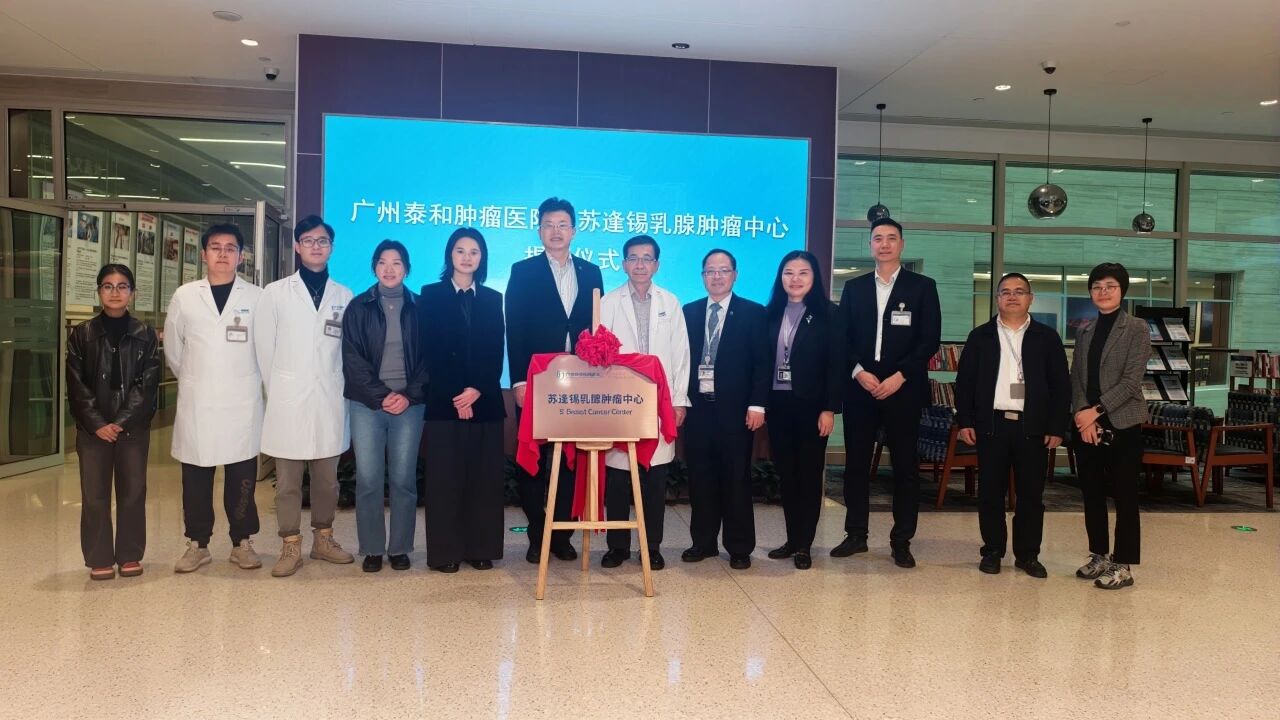
The core value of this collaboration lies in **Concord Medical’s precise positioning within the “golden triangle” of modern oncology care—top-tier specialist teams, cutting-edge treatment technologies, and a full-cycle specialty care system working in concert.
With more than four decades of dedicated focus on breast oncology, the team led by Su Fengxi has built a formidable and hard-to-replicate clinical moat. Performing over 1,000 breast surgeries annually and achieving a 58% breast-conserving surgery rate—20 percentage points above the industry average—the team has earned a strong national reputation rooted in both technical excellence and patient outcomes.
This expertise is now matched by the advanced infrastructure of Guangzhou Concord Cancer Center, a Class III specialty cancer hospital under Concord Medical. Equipped with ISO Class 100 laminar-flow operating rooms, a ProBeam proton therapy system, and TrueBeam linear accelerators, the hospital provides the expert team with world-class technological support—achieving a rare alignment between clinical skill and hardware capability.
This combination of “elite expertise + frontier technology” creates a clear, differentiated advantage in breast cancer care. While many conventional hospitals continue to rely primarily on standard radiotherapy, the new center can leverage proton therapy’s Bragg peak effect to reduce cardiac radiation exposure by more than 50%, significantly preserving long-term quality of life for younger patients.
At the same time, the Concord Medical platform enables the Su Fengxi team’s influence to extend beyond Guangdong, radiating from Southern China to a national footprint. By breaking geographical boundaries, the partnership allows high-level breast cancer diagnosis and treatment capabilities to benefit a far broader patient population—marking a meaningful step toward more equitable access to top-tier oncology care.
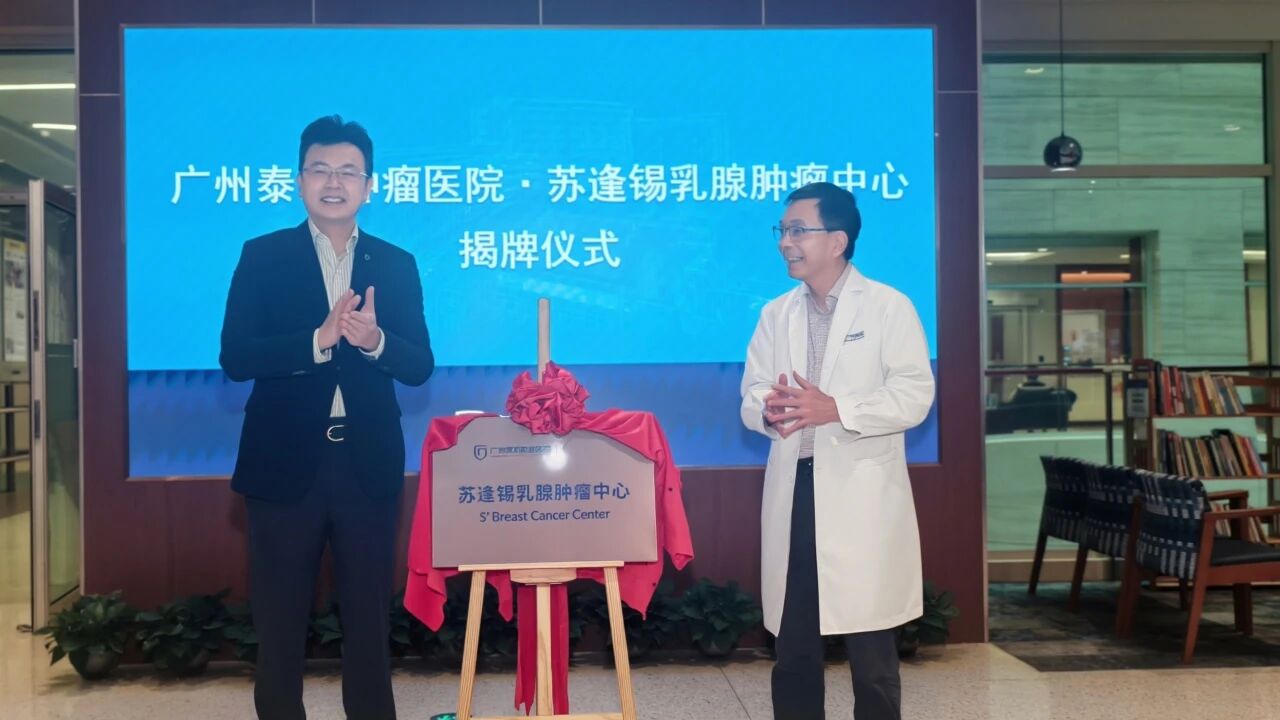
More importantly, this collaboration has established an efficient and replicable pathway for specialty development. By building on the existing medical teams and disciplinary foundations of Guangzhou Concord Cancer Center, and introducing a leading expert team, the partnership enables a rapid enhancement of specialty capabilities, expands clinical influence, and accelerates the formation of mature diagnostic and treatment systems. This model significantly shortens the specialty development cycle while reducing time and operational costs.
This innovative form of public–private collaboration provides a replicable reference for China Oncology Services Group’s future development across other specialties, supporting the scalable advancement of its specialty-oriented strategy and laying a foundation for long-term, sustainable growth.
The successful execution of this strategy is underpinned by China Oncology Services Group’s deep integration of technology and clinical services. At Guangzhou Concord Cancer Center, the proton therapy system does not operate as a standalone technology, but is embedded within a full-cycle breast cancer care pathway, encompassing breast-conserving surgery, radiotherapy, rehabilitation, and reconstruction.
For patients with left-sided breast cancer, conventional radiotherapy often entails unavoidable cardiac exposure risks, whereas proton therapy enables more precise dose control, effectively minimizing radiation to the heart. Post-treatment care further extends to comprehensive rehabilitation services, including lymphedema prevention and management, psychological support, fertility preservation, as well as nutritional and exercise guidance. This integrated approach significantly enhances patient outcomes and increases lifetime patient value.
This combined treatment-and-rehabilitation service model not only helps stabilize revenue streams across different stages of care, but also strengthens patient retention and referral-driven growth through improved patient experience and clinical outcomes.
In the field of precision medicine, the Center has further strengthened its technological moat by establishing a dual-track system integrating MDT (Multidisciplinary Team) and MTB (Molecular Tumor Board). By combining advanced technologies such as next-generation sequencing (NGS) and minimal residual disease (MRD) monitoring, complex cases undergo multiple rounds of expert evaluation, significantly enhancing the precision and personalization of treatment decisions.
This closed-loop model—spanning diagnosis, treatment, and longitudinal monitoring—marks a strategic transformation for China Oncology Services Group. The Group is evolving from a traditional single-service care provider into a one-stop comprehensive oncology solutions platform. While many institutions remain focused on the application of individual medical devices, China Oncology Services Group is now able to deliver end-to-end cancer care covering prevention, treatment, and rehabilitation, resulting in markedly stronger patient stickiness and enhanced pricing power.
As the red ribbon was unveiled at the inauguration ceremony, China Oncology Services Group’s strategic upgrade was quietly set in motion. Transitioning from equipment leadership to specialty-driven ecosystems, and from single-point breakthroughs to regional expansion, this technology-oriented medical group is carving out new growth space in an increasingly competitive oncology market through a triple innovation model integrating top-tier expert resources, advanced medical technologies, and differentiated service models.
For investors, this milestone represents more than the successful establishment of a specialty center. It signals a fundamental shift in the Group’s valuation narrative—from a hardware-driven medical services provider toward a light-asset, service-oriented healthcare operator. As the healthcare industry enters a golden period of structural growth, the value re-rating driven by this strategic transformation may only be beginning for China Oncology Services Group.